 ★★★★★237 Google Reviews
Effective Termite Control Services
Termite control that starts with a free inspection, a treatment matched to the species we find, and state reporting filed on every job. Serving Coolidge and Pinal County.
Termite Control in Coolidge, AZ
Termite control in Coolidge is not a spray-and-walk-away job. Arizona has more native termite species than any other state, and the desert subterranean termite, Heterotermes aureus, is the most economically important structural pest here. Executive Pest Solutions inspects first, identifies the species, then works to eliminate the colony behind the termite damage rather than the few insects you saw.
That matters, because the two groups of termites that attack Coolidge homes live completely differently. Subterranean termites nest in soil and travel up into your framing. Drywood termites live sealed inside the wood itself and never touch the ground. Treating one as though it were the other wastes money and lets the termite infestation grow. Every termite treatment we perform begins with identification, because the species dictates the treatment method.
- Termite inspection and termite treatment
- Subterranean and drywood termites
- Bait stations and termiticide barriers
- Real estate inspection reports
- Moisture and conducive condition correction
- State-filed treatment records
Why It Matters
Damage Builds Silently
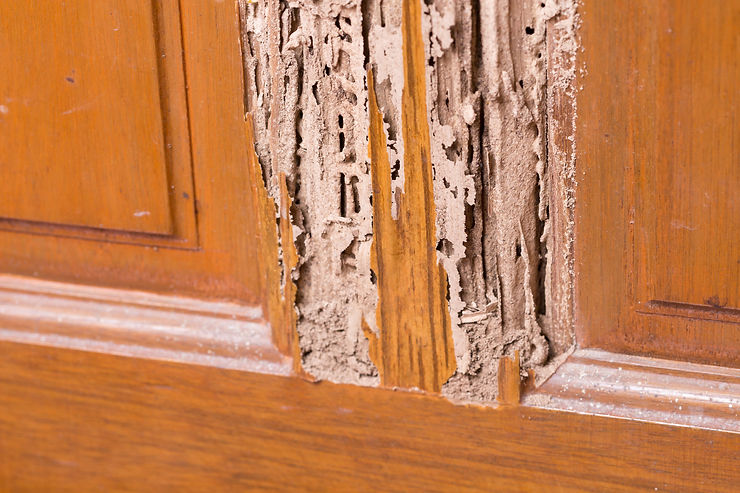
Termites hollow wood from the inside, so the damage caused by an active colony is well advanced before anything looks wrong.
Desert Species, Desert Rules
Heterotermes aureus attacks cactus ribs, fence posts, and framing across the Sonoran Desert. Advice written for wetter regions does not fit here.
Moisture Is the Invitation
Irrigation pooling against a slab, a slow leak, or a failed water heater softens structural wood and makes it far likelier to attract termites.
Arizona Keeps a Public Record
Every termite treatment in Arizona is reported to the state and stays searchable for three years, so the work on your house is documented, not just promised.
Signs of a Termite Infestation in a Coolidge Home
A termite infestation announces itself in small, easy-to-dismiss ways. Homeowners rarely see the insects. They see evidence, and reading it correctly is what our technicians are trained for.
Mud Tubes on Foundations and Block Walls
Subterranean termites must stay in contact with soil moisture, so they build earthen shelter tubes to reach wood above ground. Mud tubes are pencil-width, the color of local dirt, and run vertically up a stem wall, block fence, or slab edge. Mud tubes on your home's foundation are the clearest sign of active subterranean termites. Termites also build drop tubes from a ceiling or wall void with no visible soil connection, which surprises homeowners who assumed the termite problem was outside.
Hollow Sounding Wood and Sticking Doors
Termites consume wood from within and leave a thin surface shell. Tapping a baseboard, door jamb, or windowsill gives you hollow-sounding wood instead of a solid knock. Paint blistering for no reason, a sticking door, a floor that flexes underfoot, all point the same way. By the time a screwdriver pushes through a jamb, the termite damage is old.
Frass Pellets and Discarded Wings
Drywood termites push hard, six-sided pellets out of small kick holes, and those pellets collect in piles below the damaged wood. Piles that reappear after sweeping mean the colony inside is still feeding. Discarded wings on a sill after summer rain mean swarmers came through to start new colonies.
Swarmers With Straight Antennae
Winged termites get mistaken for flying ants constantly. Termites are social insects with straight antennae, a thick waist, and two pairs of wings of equal length. Ants have elbowed antennae, a pinched waist, and a longer front wing. Around Coolidge, subterranean termites swarm after monsoon rain from July through September, when most calls about flying swarmers arrive.
Know Your Species Before You Treat
Arizona hosts roughly eighteen native termite species, and only a few damage buildings. Correct identification separates a treatment that works from one that moves the problem elsewhere.
Subterranean Termites
Subterranean termites nest below grade and forage outward for cellulose. A mature desert subterranean colony can hold over a million individuals, which is why removing the visible workers changes nothing and structural damage keeps advancing. Colony-level control is the only outcome worth paying for. Subterranean termites enter through wood in direct contact with soil, through slab penetrations, expansion joints, and plumbing cutouts, and through shelter tubes against block or stucco. The arid land subterranean termite is common here too, turning up in homes built where creosote or greasewood was cleared, because the termites switch food sources once the brush is gone.
Drywood Termites
Drywood termites need no soil contact. The colony lives entirely inside the timber it eats, so attic framing, roof sheathing, door frames, fascia, and furniture can host termite colonies with no ground connection to trace. The two species you are most likely to meet here are the western drywood termite and the desert drywood termite. Drywood termites work slowly compared with subterranean species, but because the colony sits hidden inside the structure, termite activity is often found years later, after significant damage is done. Soil barriers and bait systems, effective as they are against subterranean termites, are the wrong tool. Drywood termites are treated in the wood, not in the ground.
What Is Not Actually a Threat
Not everything alarming causes structural damage. Surface-feeding desert termites in the genus Gnathamitermes are among the most common termites in Pinal County and are not structural pests. Carpenter ants tunnel through wood to nest but do not eat it, and their galleries are clean and smooth with no soil lining, unlike termite work. Fire ants sting and are a nuisance in Coolidge yards but cause no wood damage. Formosan termites, the invasive species behind much of the national coverage, are not established in Arizona. We tell you plainly which of these you have, because a treatment aimed at the wrong species is money wasted.
Our Termite Inspection Process
A termite inspection is a structured examination, not a walk around the block. Our free inspection covers the full interior and exterior and produces written findings you can act on.
Exterior and Perimeter
We work the slab edge, stem walls, block fences, hose bibs, irrigation lines, and every point where wood meets soil, looking for mud tubes, sheeting, and moisture staining.
Interior and Attic
Baseboards, door and window frames, cabinet bases, garage framing, and accessible roof framing get sounded and probed for hollow-sounding wood, frass, and blistering.
Moisture Mapping
We find what is keeping wood damp, whether a drip line aimed at the foundation, a slow supply leak, poor drainage, or grade built above the slab.
Findings and Recommendations
We identify the termites found, mark the termite activity on a diagram, and walk you through the treatment options that fit your property and budget.
When a lender or buyer needs one, we complete a Wood Destroying Insect Inspection Report for the property address so escrow moves without a scramble.
Termite Treatment Options for Coolidge Properties
There is no universal termite treatment. We match treatment options to the species, the construction, and how far the termite infestation has progressed. Nothing below is meant simply to kill what you can see. Each option is chosen to control termites at the colony level, and each is applied by a licensed professional following the pesticide label exactly.
Liquid Termiticide Barrier
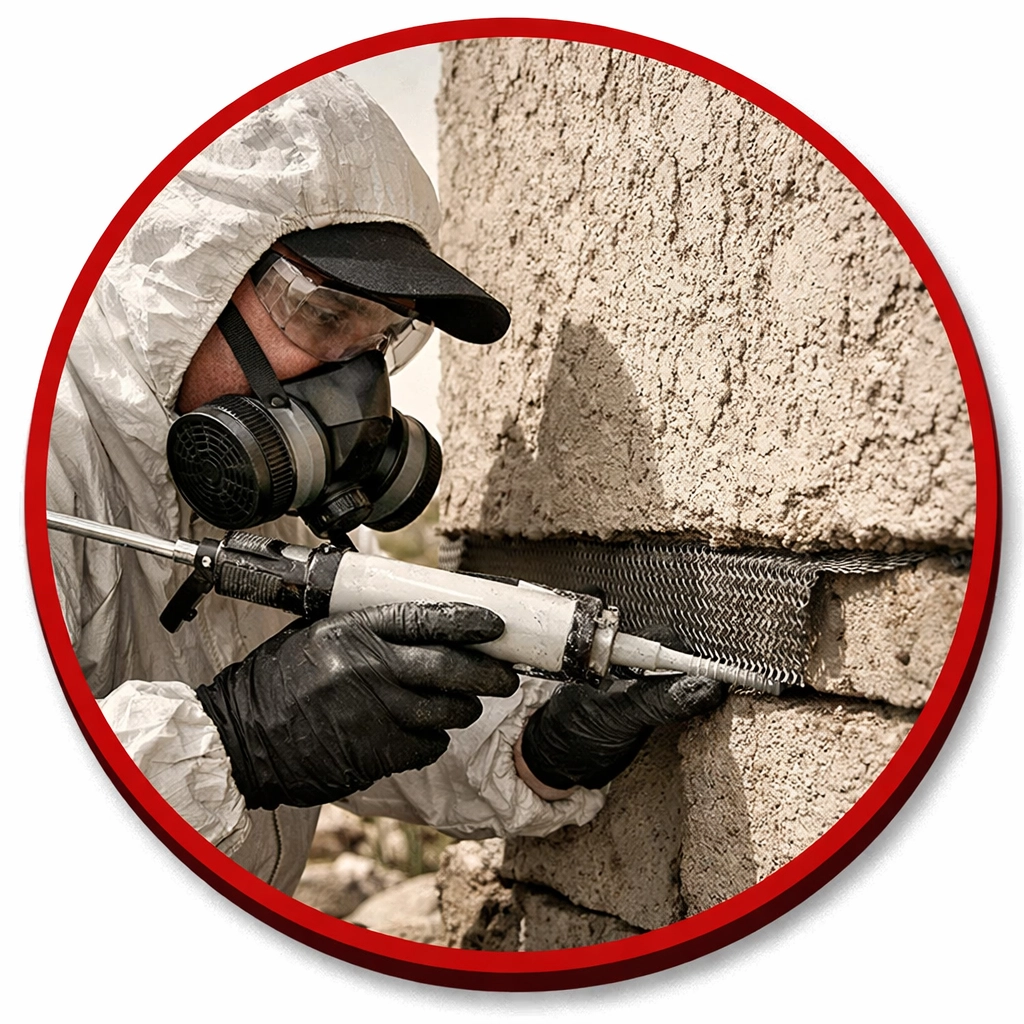
A continuous barrier of soil-applied termiticides around and beneath the structure is the workhorse termite treatment for subterranean termites. Non-repellent termiticides such as fipronil and chlorfenapyr are undetectable to foraging workers, so termites cross treated soil, carry the active ingredient home, and pass it through the colony. University of Arizona field research has measured that effect in desert subterranean termite populations. Termiticides go in at low concentrations through targeted drilling and trenching, which keeps chemicals where they need to be.
Termite Baits and Bait Stations
Termite baits work with foraging behavior instead of against it. In-ground bait stations are installed at intervals around the house, and once termites find them, workers consume the bait and share it through the colony, gradually eliminating existing termites. Bait systems suit properties where drilling is impractical, where a homeowner prefers minimal product volume, or where monitoring matters most. Bait stations also work as monitors, so a station showing fresh termite activity warns us long before termite damage does. We service and refill bait stations on schedule, because an unmonitored station protects nothing.
Localized and Wood Treatment
Where drywood termites are confined to a defined area, localized treatment of infested wood is often the right call. That can mean drilling and injecting galleries, applying borate so the treated wood stops being food, and replacing members too far gone. Widespread drywood activity through a roof is a different conversation, and we will say so when the scale points to fumigation rather than spot work.
Prevention and Conducive Conditions
Chemicals alone do not keep termites out for good. What tends to attract termites is moisture and reachable cellulose, so we correct the conditions that attract termites in the first place. That means moving irrigation away from the slab, clearing wood debris and stored lumber off the ground, opening blocked weep screeds, fixing leaks, and keeping mulch and dense planting off the foundation. Using treated wood for any new post or fence rail that touches soil is cheap insurance. Homeowners who want to prevent termite infestations long-term get a written list of what to change on the property.
Termite Services We Provide
Executive Pest Solutions handles termite work for houses, rentals, and light-commercial buildings throughout Coolidge and the surrounding Pinal County communities.
- Free termite inspection with written findings
- Species identification for subterranean and drywood termites
- Liquid termiticide barrier treatment
- Bait station installation, monitoring, and refills
- Localized treatment of infested wood
- Escrow and real estate inspection reports
- Moisture and conducive condition correction
- Post-termite treatment monitoring and follow-up
Why Homeowners Choose Us for Termite Work
We identify the species before we quote, so you pay for a treatment that fits the termites you have.
Exclusion is our specialty, so we look at how termites and other pests get in, not just how to kill what is inside.
Every termite treatment is filed with the Arizona Department of Agriculture Pest Management Division and stays publicly searchable for three years.
Local and independent. Call (480) 490-7991 and you reach the team that inspected your house. If covered termites return, so do we.
How Termite Control Fits With Routine Pest Control
Termite control is one of sixteen services Executive Pest Solutions provides across Coolidge, alongside general pest control and bug control, and the line between them matters. A monthly perimeter service manages ants, roaches, and scorpions. It does not stop a subterranean colony feeding under your slab, and no honest pest control company will claim otherwise. Termite protection is a separate discipline with its own licensing category, products, and reporting duties under Arizona law. Pairing the two gives you broad pest management plus targeted protection against a termite infestation.
Explore our full range of pest control services, or read about general pest control, bug control, rodent control, and scorpion exclusion.
Our 4 Step Approach
Inspect
A full interior and exterior termite inspection at no charge.
Identify
Species and moisture confirmed, because the treatment method depends on it.
Treat
Barrier, bait, or wood treatment by a licensed professional.
Monitor
Scheduled follow-up, station servicing, and state-filed records.
Areas We Serve for Termite Control
Coolidge is home base, and our termite crews work the surrounding Pinal County corridor every week. That includes Casa Grande, Florence, Eloy, Arizona City, Toltec, Randolph, Valley Farms, La Palma, and Adamsville, plus the Coolidge neighborhoods of North Coolidge, West Coolidge, Coolidge Heights, Carter Ranch, and Heartland. Every one of these communities sits inside the same desert subterranean termite pressure zone and gets the same inspection and reporting.
Frequently Asked Questions About Termite Control
How Much Does Termite Treatment Cost in Coolidge?
Price depends on the species, the linear footage of the building, the construction type, and how far the infestation has spread. A slab home with localized subterranean activity is a different job from a house with drywood termites in the roof framing. We walk you through the treatment options and quote a fixed price after the free inspection.
Do I Need an Inspection if I Have Not Seen Anything?
Yes, annually. Coolidge sits in a high-pressure zone for subterranean termites, and the trouble with termites is that visible signs, mud tubes included, arrive late, usually once the infestation is well established. An annual termite inspection is the cheapest insurance against costly damage.
Is Termite Treatment Safe Around Children and Pets?
Products are applied at label concentrations by a licensed professional, mostly into soil, drilled ports, or wood, not onto living surfaces. We tell you the product, where it goes, and how long to stay off treated areas.
Can I Treat Termites Myself?
Retail products reach the termites you can see and almost never the colony, which is what actually matters. Subterranean colonies forage widely from a nest you cannot locate, and drywood colonies sit sealed inside timber. Colony elimination needs professional equipment and licensed products because the infestation is out of reach otherwise.
What Happens if Termites Return?
If covered termites return after termite treatment, we come back. Because Arizona requires every termite action to be filed with the state, there is a permanent public record of what was done at your address, which protects you if you sell.
Trusted by Coolidge Property Owners
Real feedback from customers who called us when the details mattered.




Get Your Free Quote Today
Free on-site inspection. Fixed-price quote. No pressure, no surprises. Book your free inspection today or call (480) 490-7991.