.png)
Spring Bee Season Is Coming to the Arizona Desert: Are You Ready?
As winter fades and spring approaches here in the Arizona desert, the landscape undergoes a stunning transformation. The brown, dormant brush turns a vibrant green, and the wildflowers start to pop. It’s a beautiful time of year, but for homeowners in Pinal County, conditions are aligning for what could be one of the biggest bee swarm seasons in years.
With recent rainfall, a warm winter, and the rapid rise in temperatures just around the corner, the desert is about to burst into bloom: creating the perfect environment for honeybee colonies to grow, split, and swarm. If you’ve lived in Coolidge, Casa Grande, or San Tan Valley for any length of time, you know that when the desert blooms, the bees follow.
For homeowners across the region, that means one thing: bee season will be on us very soon. At Executive Pest Solutions, your friendly neighborhood pest experts, we want to make sure you’re prepared before that first "buzz" becomes a full-blown colony in your attic.
Why This Season Could Be Bigger Than Ever
Every year is a bit different, but 2026 is shaping up to be a "perfect storm" for bee activity. We’ve been watching the weather patterns closely, and several environmental factors are converging right now that point toward a very active spring.
First off, we’ve had above-average rainfall. In the Arizona desert, water is life. More rain means a stronger desert bloom, providing an abundance of nectar sources. When food is plentiful, bee colonies grow at an exponential rate.
Secondly, our mild winter temperatures played a huge role. Usually, a hard freeze can naturally thin out some of the weaker colonies. This year, the lack of extreme cold allowed more colonies to survive and thrive through the winter months. They are starting the spring season with a "head start," meaning they’ll be ready to split and swarm much earlier than usual.
Finally, the impending spring heat acts as the trigger. As temperatures climb into the 80s and 90s, hives become overcrowded. This triggers the "swarming" behavior, where half the colony leaves with a new queen to find a new home. When these elements combine, bee populations surge: and that means more infestations and established hives in homes, businesses, sheds, irrigation boxes, block walls, and other structures.

The Reality of Bees in the Desert Southwest
When most people think of honeybees, they picture the fuzzy, docile insects from nature documentaries. While we love the role bees play in our ecosystem, the reality of wild bees in the Arizona desert is a bit more intense. In the Southwest, the vast majority of wild honeybees are Africanized honeybees.
To the naked eye, Africanized bees look nearly identical to European honeybees. You won't be able to tell the difference just by looking at them while they’re on a flower. However, their behavior is world apart. Africanized bees, often called "killer bees" in sensationalized news reports, earned their reputation for a reason.
Africanized bees are known for:
Extreme defensiveness: They guard a much larger radius around their hive than standard honeybees.
Aggressive swarming response: If the hive is disturbed, the entire colony: not just a few foragers: is likely to attack.
Persistence: They have been known to pursue perceived threats for long distances, sometimes up to a quarter-mile.
Numbers: They attack in much larger numbers, which increases the amount of venom delivered to the victim.
Because of this, a hive inside or around your home isn’t just a nuisance or a project for next weekend: it can quickly become a serious safety hazard.
Don’t Become a Statistic: The Safety Risks are Real
We don't say this to scare you, but to keep you safe. There have been multiple documented cases in recent years across Arizona where both pets and people have been severely injured or even killed by aggressive bee attacks.
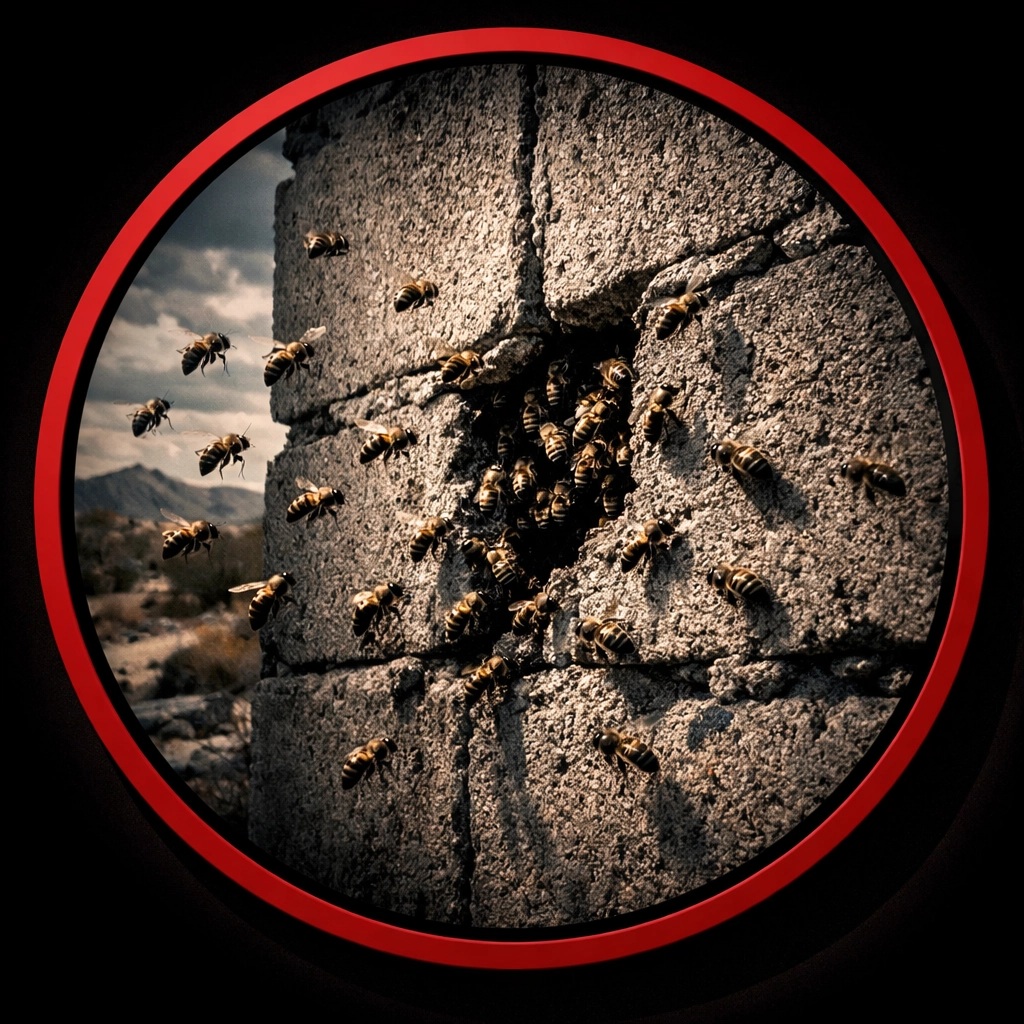
These incidents often happen when a colony is accidentally disturbed. You might be doing routine yard work, running a lawnmower, or using a weed whacker near a block wall, unaware that a colony has moved into the hollow space inside. The vibration from the engine is often enough to trigger a defensive response.
We’ve seen hives in irrigation boxes, under eaves, inside shed floors, and even tucked into the engine compartments of parked cars. In some cases, improperly trained pest professionals: or well-meaning neighbors with a can of spray: can inadvertently create the emergency they were trying to solve. Spraying the entrance of a hive doesn't kill the colony; it just makes them angry and sends them boiling out of every crack and crevice in the structure.
Why Professional Bee Removal is the Only Way
When Africanized bees establish a colony in or around your structure, time and experience matter. This is absolutely not a DIY situation. If you are looking for bee removal in Coolidge, AZ, you need someone who understands the biology of these insects.
Improper removal can lead to a host of problems:
Agitation: As mentioned, DIY attempts often result in mass attacks.
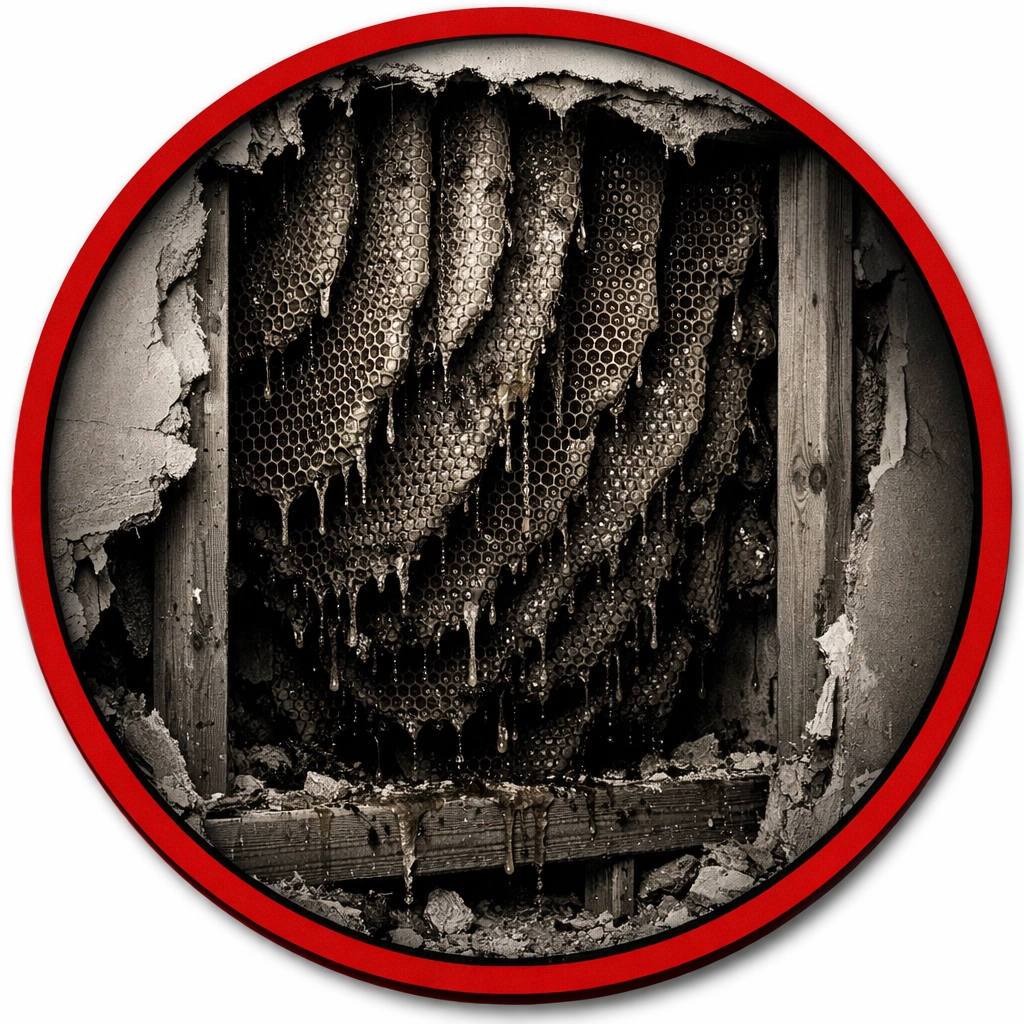
Leftover Comb and Honey: This is a huge one. If you kill the bees but leave the hive, you are leaving behind pounds of wax and honey. In the Arizona heat, that honey will melt, seep through your drywall, attract ants and roaches, and even lead to structural rot and mold.
Future Infestations: Bees leave behind pheromones. If the hive isn't properly cleaned and the area isn't "excluded" (sealed up), a new swarm will be attracted to that exact same spot next year.
Costly Repairs: Sealing a hive in can lead to thousands of dollars in structural repairs down the road when the honey starts dripping from your ceiling.
Trust a Local Expert: Executive Pest Solutions
Based right here in Coolidge, Arizona, Executive Pest Solutions is a trusted local expert in safe, professional bee elimination and full structural comb removal. We’ve spent over 25 years perfecting our exclusion services, and that expertise extends directly to our bee work.
When you call Executive, you’re getting a team that treats every bee situation as a true emergency. We know that if there’s a swarm near your front door, you can’t wait three days for a technician. We respond quickly and professionally, prioritizing the safety of your family, pets, and neighbors first.
Our process isn't just about "spraying the bees." We perform complete hive, comb, and honey removal. We open up the affected area, remove every bit of wax and honey, sanitize the space to remove pheromones, and then provide the necessary repairs to restore the area and prevent reinfestation. Whether you're in Casa Grande or San Tan Valley, we bring the right equipment and the right experience to handle it safely.

Don’t Take Chances This Bee Season
If you see increased bee activity: like bees consistently entering and exiting a hole in your eaves or a crack in a block wall: act immediately. If you hear buzzing inside your walls or ceilings, or if you spot a massive "ball" of bees forming on a tree branch (a swarm), give us a call.
This is not the time to experiment or shop for the cheapest, uncertified option. When it comes to aggressive Africanized bees, the difference between a controlled, professional removal and a dangerous emergency often comes down to the person holding the equipment.
Executive Pest Solutions has the knowledge, the protective gear, and the field experience to handle it right the first time. We take the stress off your shoulders so you can enjoy the beautiful Arizona spring without the fear of a defensive colony living in your walls.
Stay Safe This Spring
As the Arizona desert comes alive this spring, so will the bees. Stay alert, stay prepared, and know who to call when it matters most. Bee eliminations, full comb removals, and structural repairs are our specialty. Don’t take chances: protect your home, your pets, and your family.
When bees become an emergency, Executive Pest Solutions is ready to respond. If you're worried about activity on your property, check out our FAQs or reach out to us directly. Let's keep this bee season safe and buzz-free!


Comments