.png)
Looking For Solar Panel Screening in Arizona? Here Are 10 Things You Should Know
You made a smart investment. Solar panels on your Arizona home are saving you money and helping the environment. But here's something most solar companies won't tell you upfront.
That cozy gap between your panels and your roof? Critters love it.
Birds, rodents, and other Arizona wildlife see that shaded space as prime real estate. And once they move in, they can cause serious damage to your panels, your roof, and your wallet.
That's where solar panel screening comes in. Let's walk through everything you need to know before making this important decision for your home.
1. Solar Panel Screening Is Your First Line of Defense
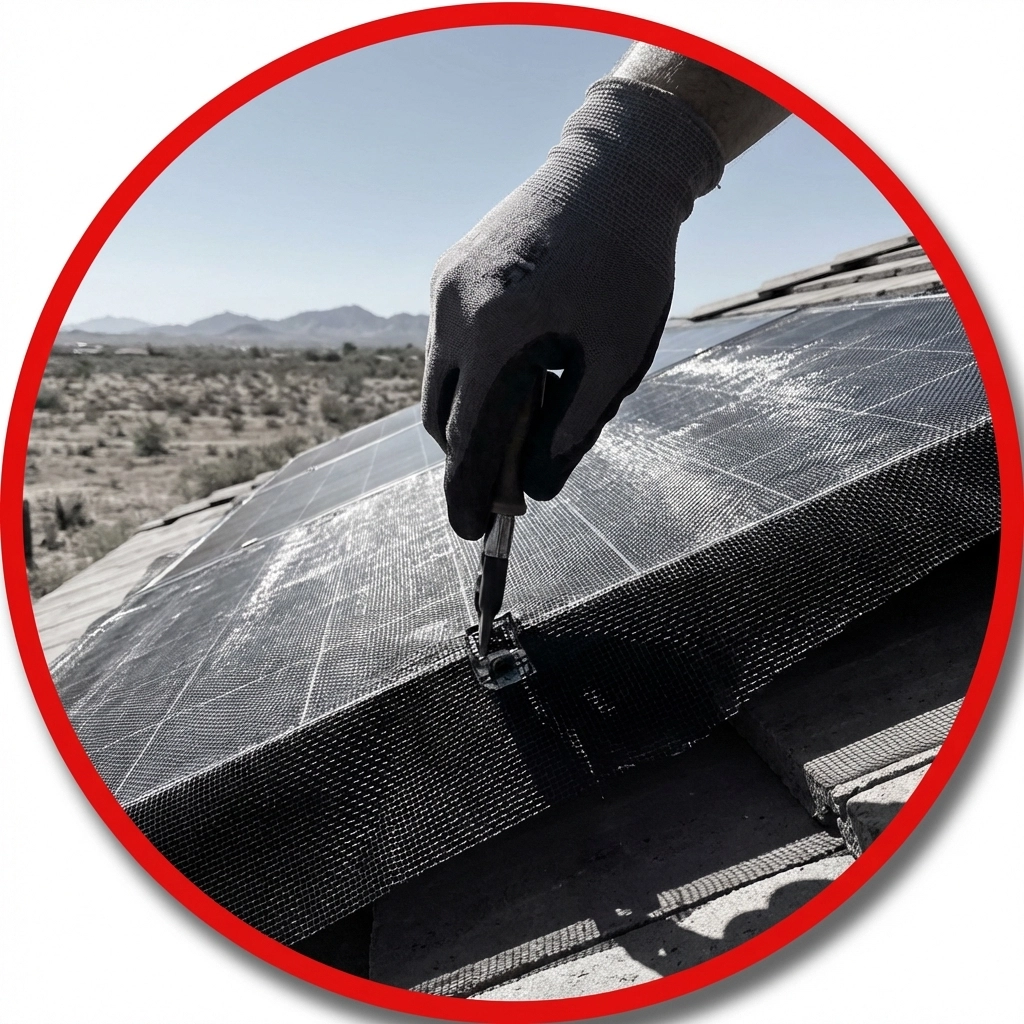
Solar panel screening is exactly what it sounds like. It's a protective mesh barrier that wraps around the perimeter of your solar panels. This creates a physical block between your expensive equipment and unwanted guests.
The screening attaches directly to the panels themselves. No drilling into your roof required. It seals off that tempting gap while still allowing proper airflow underneath.
Think of it like putting a fence around your garden. The plants still get what they need. But the rabbits stay out.
2. Arizona's Climate Makes This a Bigger Deal
Here's the thing about our desert climate. It's brutal.
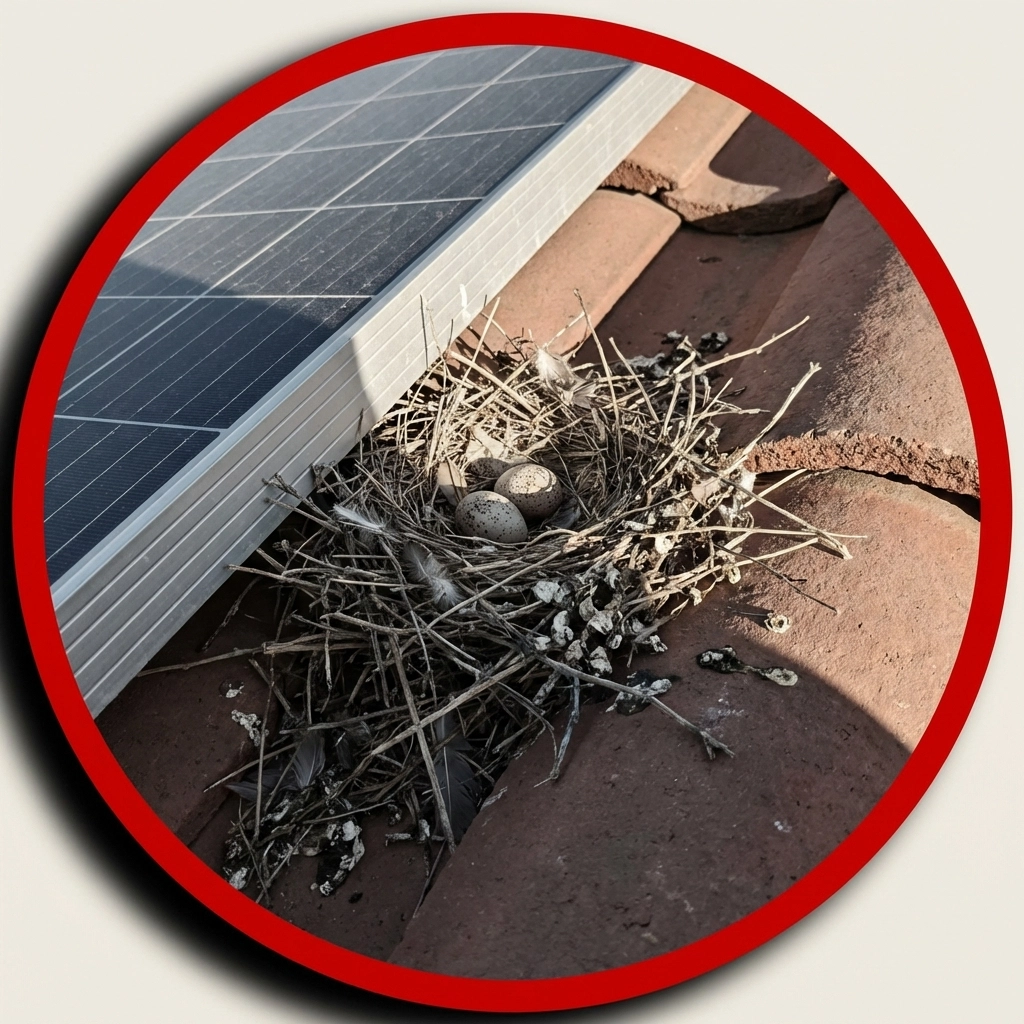
Arizona summers push temperatures well above 110°F. That space under your solar panels stays significantly cooler than the surrounding roof. For birds and small mammals trying to survive the heat, it's basically a luxury apartment.
Pigeons are the biggest culprits. They nest year-round in Arizona. And they absolutely love solar panels.
But they're not alone. Roof rats, sparrows, and even the occasional squirrel will set up shop if given the chance.
3. Unscreened Panels Can Cost You Big Time
Let's talk money. Because that's really what this comes down to.
Pest damage to solar panels isn't covered by most warranties. When birds nest under your panels, their droppings accumulate. This creates hot spots that reduce efficiency. Over time, the acidic waste can actually corrode wiring and components.
Rodents are even worse. They chew through wires. One determined roof rat can take out an entire panel string in a single night.
We've seen homeowners face repair bills in the thousands. All because they didn't know about a simple preventative measure.
If you want to learn more about how pests can damage your property, check out our guide on pest damage prevention.
4. There Are Different Types of Screening Materials
Not all solar panel screening is created equal. Here's what's available:
Galvanized Steel Mesh – The most common and affordable option. It's durable and handles Arizona's extreme temperatures well. Expect it to last 10-15 years with proper installation.
Stainless Steel Mesh – The premium choice. It won't rust or corrode. Perfect if you live near agricultural areas or anywhere with higher moisture levels.
Critter Guard Clips – These are individual clips rather than full screening. They're less expensive but offer less comprehensive protection.
For most Arizona homeowners, galvanized steel mesh hits the sweet spot between cost and performance.
5. Professional Installation Matters More Than You Think
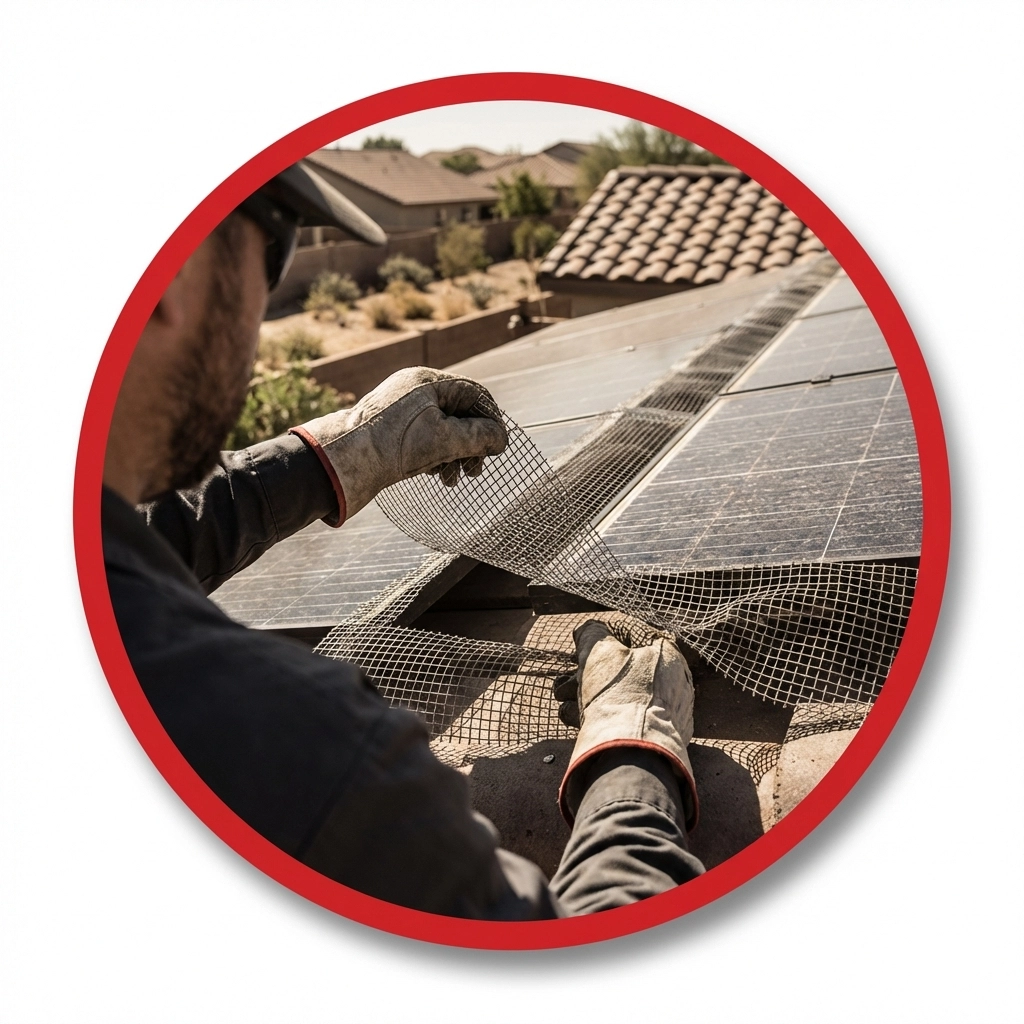
Can you install solar panel screening yourself? Technically, yes.
Should you? That's a different question.
Here's why professional installation makes sense:
Safety – You're working on a roof, often at significant heights
Warranty protection – Improper installation can void your solar panel warranty
Proper sealing – Gaps as small as half an inch can let determined pests through
Correct materials – Pros know which screening works best for your specific panel setup
DIY installation might save you a few hundred dollars upfront. But one mistake can cost you thousands in damage or voided warranties.
6. The Best Time to Install Is Right Now
Ideally, screening should be installed when your solar panels go up. But most solar installers don't offer this service. Or they don't mention it at all.
If you already have panels, don't wait until you have a problem. Prevention is always cheaper than removal and repair.
That said, if you're already seeing signs of pest activity, you'll need to address that first. Installing screening over an active nest just traps the problem inside.
Signs you might already have unwanted guests:
Bird droppings around or under panels
Nesting materials visible at panel edges
Scratching sounds from your roof
Decreased panel efficiency without obvious cause
7. Screening Actually Improves Panel Performance
Here's a benefit that surprises most homeowners. Proper screening can actually help your panels work better.
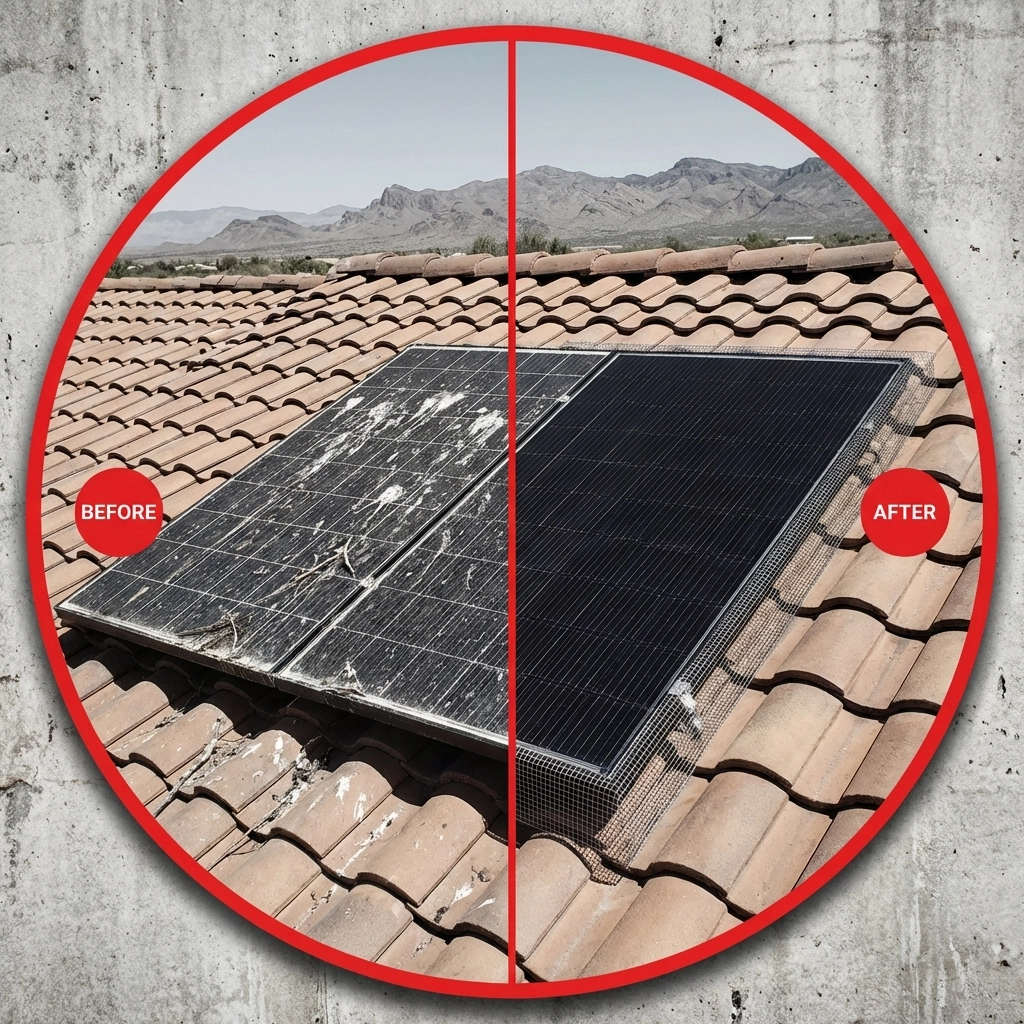
Bird droppings block sunlight. Even a thin layer reduces efficiency. When nesting materials accumulate, they can create shade spots that hurt performance across the entire array.
Screening keeps all of that debris out. Your panels stay cleaner longer. They produce more power consistently.
Some homeowners report efficiency improvements of 5-10% after installing screening and cleaning off existing debris. That adds up over the life of your system.
8. Not All Pest Control Companies Offer This Service
Solar panel screening sits at the intersection of pest control and solar maintenance. Many traditional pest control companies don't handle it. Most solar companies consider it outside their scope.
You need a team that understands both sides.
At Executive Pest Solutions, we've seen what happens when Arizona wildlife meets expensive solar equipment. We know which materials work in our climate. We understand how to secure panels without damaging them.
This isn't just about keeping birds out. It's about protecting your home from pest damage while preserving your solar investment.
9. Maintenance Is Minimal But Important
Once screening is installed, it doesn't require much attention. But "low maintenance" doesn't mean "no maintenance."
Here's what to keep an eye on:
Annual inspections – Check for gaps, loose sections, or damage from weather
Debris clearing – Leaves and debris can accumulate against screening edges
Rodent checks – If you have roof rat activity in your area, watch for chew marks
Most homeowners can handle visual inspections from the ground with binoculars. For anything that needs hands-on attention, call a professional.
10. It's an Investment That Pays for Itself
Let's put this in perspective.
Quality solar panel screening for an average Arizona home runs between $500-$1,500, depending on your system size and chosen materials.
A single rodent-damaged panel replacement? $300-$500 minimum, plus labor.
A full rewiring after extensive pest damage? Easily $2,000-$5,000.
And that's before we talk about reduced efficiency from debris accumulation over years of exposure.
Screening pays for itself the moment it prevents your first serious pest incident. Everything after that is pure savings.
Ready to Protect Your Solar Investment?
Your solar panels are working hard for you every single day. They deserve protection from Arizona's wildlife population.
Solar panel screening is one of those simple solutions that prevents major headaches down the road. It keeps your panels efficient. It protects your warranty. And it stops pest damage before it starts.
At Executive Pest Solutions, we're your friendly neighborhood pest nerds who actually understand solar systems too. We've helped countless Arizona homeowners protect their investment with professional screening installation.
Don't wait until pigeons move in or roof rats start chewing. Let's get your panels protected now: so you can enjoy clean energy without the critter complications.


Comments