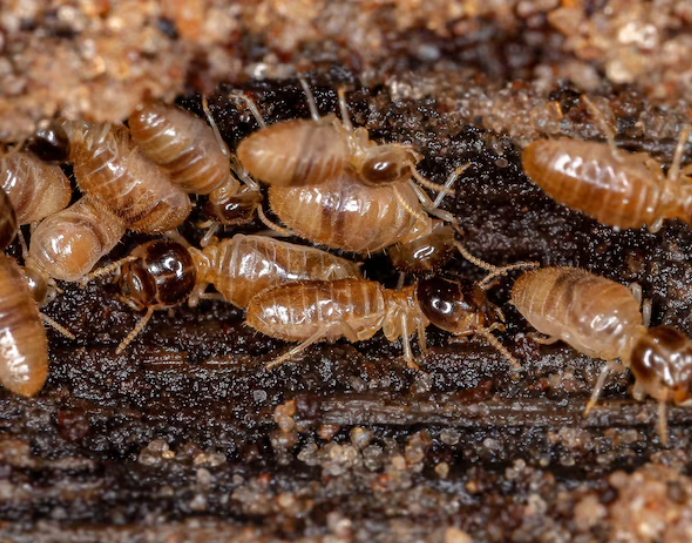
Identifying Termites: What Do Termites Look Like and Why It Matters

Learning to identify termites can save Arizona homeowners thousands of dollars in structural repairs. In this guide we explain what termites look like, the types you are most likely to encounter here in Pinal County, and the warning signs that tell us it is time for an inspection. We cover their physical features, behavior patterns, and the kind of damage they leave behind, so you can act before a small problem turns into an expensive one. If you are comparing pest control in Coolidge, AZ, knowing what to look for makes that first call a lot more useful.
Physical Characteristics of Termites
Termites have soft, pale bodies that range from white to light brown. They have straight antennae and a narrow waist that separates the chest from the belly. Worker termites are small, about 1/8 to 1/4 inch long, while flying termites, often called swarmers, can grow up to an inch. Their bodies have three parts, the head, the chest, and the belly. These features help tell termites apart from ants, which have bent antennae and a pinched waist instead of a narrow one. Termites play a role in the desert ecosystem, but once they target the wood in your home, that role becomes a costly problem for us to help you solve.
Types of Termites Common in Arizona
There are three main types of termites we watch for in Arizona homes. Subterranean termites are the most damaging, and they build mud tubes to protect themselves from open air as they travel between the soil and your home. They attack from underground and cause the bulk of the structural damage we see across Pinal County. Drywood termites do not need soil contact and live directly inside dry wood, including furniture, framing, and window trim. They leave behind small pellets that look like sawdust, often the first sign a homeowner notices. Dampwood termites prefer moist wood and tend to show up around irrigation boxes, leaking pipes, or old landscaping timbers. Their colonies are usually smaller than subterranean colonies, but they still cause real damage over time. Knowing which type is present helps our team recommend the right treatment method for your property.

Signs of Termite Infestation
Spotting termite signs early can prevent major damage to your home, and in a desert climate that shifts quickly with the seasons, regular checks matter more than most homeowners expect. Here is what our team asks clients to watch for between inspections.
- Mud tubes on walls, beams, or crawl spaces where subterranean termites travel
- Discarded wings near windows or doors after a termite swarm
- Wood that sounds hollow when tapped
- Floors that feel soft or spongy underfoot
- Small piles of sawdust like droppings around the home
- Tiny holes in wood structures
- Termite droppings that resemble coffee grounds
If you notice even one of these signs, it is worth a professional look before the damage has a chance to spread further.
Why Early Detection Matters
Identifying termites early is one of the most cost effective things a homeowner can do. Termites work quietly and stay hidden, often inside walls or underground, where they are impossible to see without knowing what to look for. Left alone, they can cause expensive structural damage over months or years. Catching them early through regular inspections makes treatment far more effective and far less invasive. Our team has spent more than 25 years inspecting Arizona homes for exactly this kind of early activity, and acting quickly when you suspect termites can save thousands of dollars in repairs. For a closer look at the specific indicators we watch for locally, see our guide on recognizing key indicators of termite damage in Coolidge, Arizona.
Prevention and Treatment in Coolidge Homes
Preventing termites is almost always easier and cheaper than treating an infestation that has already taken hold. Start by reducing moisture around the home, since termites are drawn to damp conditions even in a desert climate. Fix leaky pipes, improve ventilation in crawl spaces, and direct water away from the foundation. Keep firewood, mulch, and other wood debris away from the house to eliminate wood to soil contact, and seal cracks in the foundation, walls, and roofline to close off entry points before termites find them. If you already suspect termites are active on your property, our termite control team can walk the property, confirm what is happening, and build a plan around it.
Frequently Asked Questions
What do termites look like?
Termites are small, pale insects with soft bodies, straight antennae, and a narrow waist connecting the chest and abdomen, usually white to light brown in color.
How can I tell termites apart from ants?
Termites have straight antennae and a wide, uniform waist, while ants have bent antennae and a visibly pinched waist between the body sections.
What is the first sign of a termite problem in Arizona homes?
Mud tubes along the foundation or discarded wings near windows and doors after a swarm are usually the first visible signs of subterranean termite activity.
How often should Arizona homeowners check for termites?
We recommend a visual check every few months and a full professional inspection at least once a year, since termite activity in Arizona does not fully pause during any season.
Can termite damage be repaired if it is caught early?
Yes, catching termite activity early usually limits the damage to a manageable, affordable repair instead of a full structural rebuild.
Do termites go away on their own?
No, termite colonies do not leave on their own, and activity typically continues and grows until the entry points are addressed and the colony is treated.
Ready for a Termite Inspection in Coolidge, AZ
If you are noticing any of these signs in your Coolidge area home, reach out to our team for a full inspection. Call (480) 490-7991 during business hours, Monday through Friday from 8 AM to 5 PM, or text (480) 605-2415 after hours.